The free method, step by step
- 01Look at the URL first. Many platforms host on their own domain or a subdomain of it, so the answer is often in the address bar before you do anything.
- 02Click through to the checkout. Even when the sales page sits on a custom domain, payment usually hands off to the platform and names it.
- 03View the page source and search for the platform name. Asset URLs, CSS class prefixes and script hosts almost always leak it.
- 04Look at the script hosts specifically. A page can be styled to look like anything, but it still loads its JavaScript from somewhere.
- 05Check the login link. « Members area », « My courses » or « Sign in » usually points straight at the platform.
- 06Look at the footer. Several platforms require attribution on lower plans, which is a free answer.
- 07If nothing matches, look for a site builder rather than a course platform · a custom stack usually means WordPress, Webflow or Framer plus a separate checkout.
A custom domain proves nothing. Almost every platform supports them, which is exactly why the source and the checkout are the reliable tells.
Where this stops working
- One page at a time, and you have to already have the URL in hand.
- It tells you the platform, not whether the offer sells. A polished Kajabi page with no traffic is not a competitor.
- You cannot go the other way. « Show me every coaching offer on Skool in Germany » is the question that is actually worth answering, and no page inspection gets you there.
- Creators migrate. A platform read today says nothing about where they were six months ago, or where they are heading.
- Multi-platform sellers look like single-platform ones. Checking one page hides the other four things they sell.
How LaunchSpy does the same thing
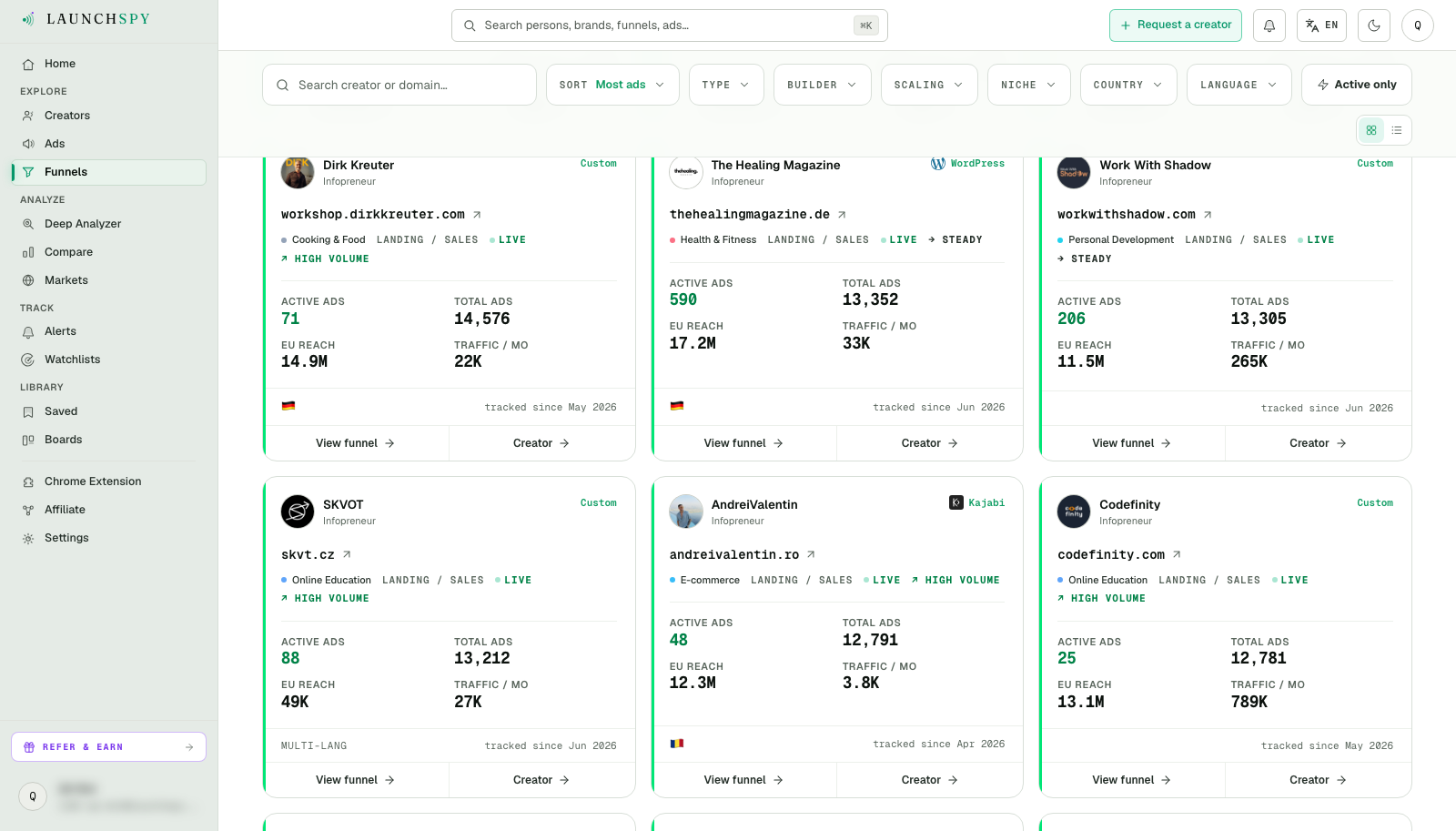
- Platform detected across 51 of them, on every creator in the corpus
- The reverse query · filter a whole market by platform, niche and country
- Every platform a creator uses, not just the one on the page you happened to open
- The funnel stack alongside the platform · pixels, landing stack, payment stack
- The ads driving traffic to it, so you can tell a real business from a nice page
Questions people ask
Can a creator hide which platform they use?
They can make it harder with a custom domain and a stripped theme, but the checkout and the script hosts almost always give it away. Fully hiding it means giving up the platform's own checkout, which very few do.
Why does the platform matter?
It sets the fees they pay, what their funnel can do, and how easily they can move. It is also a strong hint about their scale · the platform someone picks at $2k a month is rarely the one they keep at $50k.
What if the page is on WordPress or Webflow?
Then the course lives somewhere else. Follow the buy button · the delivery platform is behind the checkout, not behind the sales page.
Do this for a whole niche, not one page at a time
110,000+ creators · 16.2M+ ads · 340,000+ funnels · 51 platforms · 10 markets
Start free